
You are in the middle of your daily routine when the power suddenly goes out. Maybe the kitchen appliances stop working, the lights turn off, or your office equipment shuts down without warning. You check the electrical panel and notice that a circuit breaker has tripped again. At this point, you may be asking, Why Does My Circuit Breaker Keep Tripping? Repeated electrical interruptions can affect homes and businesses, especially when several devices depend on the same electrical system. For commercial properties, professional commercial electrical services can help identify electrical faults and address problems affecting daily operations.
A tripping circuit breaker can be frustrating. You might worry about damaged appliances, interrupted work, or the possibility of an electrical fire. The uncertainty often makes the situation more stressful.
However, a circuit breaker that trips is not always defective. In many cases, it is responding to an electrical condition that could damage wiring or equipment.
The important part is identifying the reason behind repeated trips instead of continuing to reset the breaker.
This guide explains the possible causes of circuit breaker trips, warning signs to watch for, safe steps to take, and situations that require professional electrical assistance.
Why Does My Circuit Breaker Keep Tripping?
A circuit breaker keeps tripping when it detects an electrical condition that causes it to interrupt the flow of electricity.
Circuit breakers are installed inside electrical panels to protect circuits from certain unsafe conditions. When too much electrical current flows through a circuit, or when certain electrical faults occur, the breaker may shut off power.
This interruption helps protect the connected wiring and electrical equipment.
A breaker can trip because of excessive electrical demand, damaged wiring, faulty equipment, or another electrical problem.
Sometimes the issue involves the breaker itself, but this should not be assumed without professional testing.
Repeated trips are a warning that the electrical system needs attention.
Main Causes of Repeated Circuit Breaker Trips
Several electrical conditions can cause a breaker to shut off repeatedly.
Identifying the actual cause is important because different problems require different repairs.
Overloaded Electrical Circuits
An overloaded circuit occurs when connected equipment requires more electrical current than the circuit is designed to carry.
For example, several appliances operating at the same time may place excessive demand on a shared circuit.
When this happens, the circuit breaker may trip to interrupt the excessive current.
Repeated overloads may indicate that the electrical system needs evaluation or that electrical demand should be distributed differently.
Short Circuits in Electrical Wiring
A short circuit occurs when electricity follows an unintended path that allows a large amount of current to flow.
This can happen when damaged wiring or faulty electrical components create an improper connection.
A short circuit may cause a breaker to trip very quickly.
Because short circuits can create dangerous heat and electrical damage, the affected circuit should remain off until a qualified electrician evaluates it.
Ground Faults
A ground fault occurs when electrical current follows an unintended path toward ground.
Ground faults may involve damaged insulation, faulty equipment, or electrical connections that are no longer operating correctly.
Some protective devices are designed to interrupt electricity when these conditions occur.
Professional testing may be necessary to determine the source of the fault and the appropriate repair.
Damaged Electrical Equipment
Sometimes the electrical problem begins with an appliance or connected device.
Damaged internal components or faulty power cords may cause electrical faults that lead to breaker trips.
If the problem occurs when particular equipment operates, that information may help during professional inspection.
Equipment showing visible damage, unusual heat, or burning smells should remain unused.
Problems With the Circuit Breaker
Circuit breakers can also develop faults.
A damaged breaker may fail to operate correctly or show signs of overheating.
However, repeated trips alone do not prove that the breaker is defective.
An electrician should evaluate the connected circuit before deciding whether breaker replacement is necessary.
Can a Circuit Breaker Trip Without an Overload?
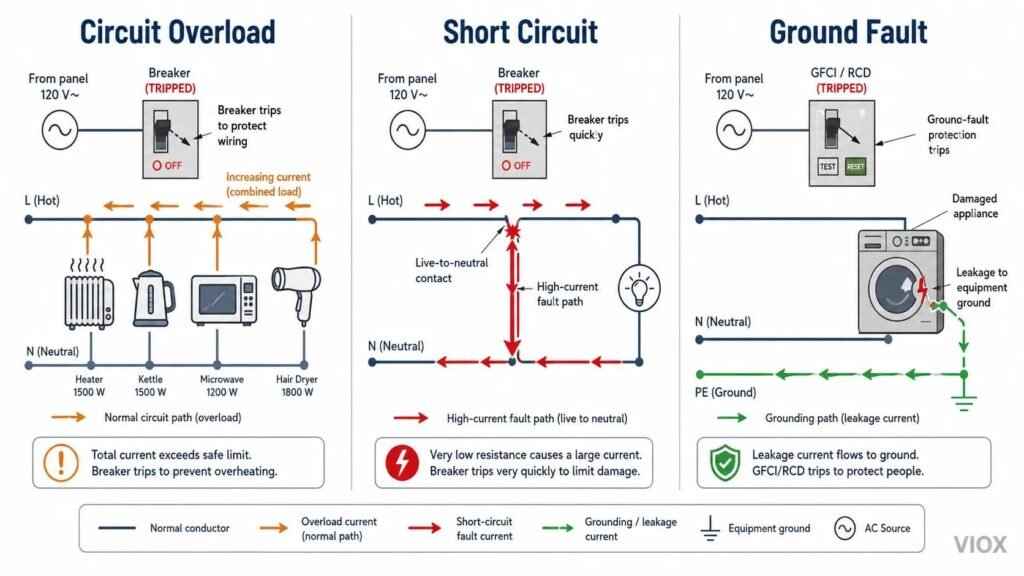
Yes. A circuit breaker may trip even when the connected equipment is not using excessive electricity.
Short circuits, ground faults, damaged wiring, and faulty electrical components can also cause interruptions.
This is important because reducing appliance use may not solve every breaker problem.
For example, a circuit with damaged wiring may continue experiencing faults even when very little equipment is connected.
A breaker that trips immediately after being reset may indicate a serious electrical condition.
If this happens, leave the breaker off and arrange professional inspection.
The correct repair depends on identifying the cause rather than assuming every trip results from excessive electrical demand.
Safe Steps to Take When a Circuit Breaker Trips
When a breaker trips, safety should come before restoring power.
The following steps focus on recognizing hazards and collecting useful information without opening electrical equipment.
Step 1: Check for Immediate Warning Signs
Pay attention to smoke, burning smells, unusual sounds, or visible electrical damage.
These conditions may indicate overheating or another dangerous electrical fault.
If smoke, flames, or immediate danger is present, leave the building and contact emergency services.
Avoid touching damaged outlets, electrical panels, or exposed wiring.
Step 2: Identify the Affected Area
Notice which lights, outlets, or appliances stopped working.
The interruption may affect a single room or several areas connected to the same circuit.
This information can help an electrician identify the affected electrical components.
There is no need to remove outlet covers or open the electrical panel to investigate.
Step 3: Consider Recent Electrical Activity
Think about which appliances or devices were operating before the breaker tripped.
Perhaps several appliances were running at the same time, or a particular device had just started.
These observations may help identify patterns.
Avoid deliberately recreating a suspected electrical fault to test your theory.
Step 4: Avoid Repeated Breaker Resets
A breaker that trips repeatedly may be responding to an unsafe electrical condition.
Continuing to reset it can expose the circuit to repeated faults.
If the breaker trips again after a reset, leave it off and request professional assistance.
Never force a breaker into the operating position.
Step 5: Arrange Professional Electrical Testing
A qualified electrician can inspect the affected circuit, connected equipment, and relevant electrical components.
Testing helps determine whether the problem involves excessive electrical demand, damaged wiring, or another fault.
Once the cause is identified, suitable repairs can be planned.
This approach is safer than replacing electrical parts without knowing the source of the problem.
A Real Life Example of a Circuit Breaker That Keeps Tripping
Imagine a homeowner who recently added several electrical appliances to a kitchen.
For the first few days, everything appears to operate normally.
Then the homeowner notices that the circuit breaker occasionally trips when multiple appliances are running.
At first, the homeowner resets the breaker and continues using the equipment.
Over time, the interruptions become more frequent.
The homeowner begins to wonder, “Why Does My Circuit Breaker Keep Tripping when the appliances appear to work normally?”
Instead of repeatedly resetting the breaker, the homeowner arranges a professional electrical inspection.
The electrician evaluates the circuit, connected equipment, and electrical demand.
If the circuit is overloaded, the electrician can determine which electrical improvements may be necessary.
If another fault is present, the inspection can identify the affected components.
This example shows that a tripping breaker may be responding to conditions elsewhere in the electrical system.
The goal is not merely to restore electricity. It is to address the condition causing the interruption.
Errors That Can Make Circuit Breaker Problems Worse
When electricity stops working, people often want to restore power as quickly as possible.
That reaction is natural, but certain actions can increase electrical risks.
Resetting the Breaker Again and Again
Repeated breaker trips should not be treated as a minor inconvenience.
A breaker may be interrupting electricity because a dangerous condition is present.
Resetting it repeatedly without investigating the cause can allow electrical faults to continue.
Professional evaluation is important when the same breaker trips more than once.
Replacing a Breaker With a Higher Rated Model
Circuit breakers must be suitable for the wiring and circuits they protect.
Installing a breaker with a higher current rating merely to prevent trips can allow excessive current to flow through unsuitable wiring.
This may create overheating and fire hazards.
Breaker replacement should be handled by a qualified electrician.
Ignoring Damaged Appliances
A faulty appliance can contribute to repeated breaker trips.
Continuing to use equipment that shows damage or unusual behavior may make the problem worse.
Stop using suspicious equipment and arrange appropriate inspection or repair.
Attempting Internal Electrical Repairs
Electrical panels and wiring contain components that can remain energized even when certain breakers are switched off.
Removing panel covers or touching internal connections without proper training can cause serious injury.
Professional electrical work requires suitable testing equipment and safety procedures.
Practical Tips for Reducing Repeated Breaker Trips
Some electrical problems develop as a property’s electrical requirements change.
Careful planning and maintenance can help reduce avoidable interruptions.
Pay Attention to Electrical Demand
Every circuit has a limit on the amount of current it can safely carry.
Operating several high power appliances on the same circuit may create an overload.
If trips happen during periods of heavy electrical use, the circuit should be evaluated.
Professional inspection can determine whether electrical improvements are needed.
Watch for Changes in Electrical Performance
Repeated power interruptions, flickering lights, and unusual equipment behavior may indicate electrical concerns.
Record when these changes occur and which equipment is operating.
These details can help an electrician evaluate the problem.
Keep Electrical Equipment in Suitable Condition
Damaged power cords, loose plugs, and faulty equipment can create electrical hazards.
Avoid using equipment that shows visible damage or overheating.
Proper electrical maintenance can help identify concerns before they lead to additional interruptions.
Plan Electrical Improvements Before Adding Equipment
New appliances and electrical installations may increase demand on existing circuits.
Before major changes, the electrical system should be evaluated for suitability.
Professional planning can help determine whether additional wiring or other electrical improvements are necessary.
Circuit Breaker Trips During Remodeling and Rewiring
Remodeling projects can change the amount of electricity used in a home.
Additional lighting, appliances, and outlets may place new demands on existing electrical circuits.
If the electrical system is not suitable for these changes, repeated breaker trips may occur.
Professional remodeling and rewiring services can help address wiring concerns and support planned electrical improvements.
An electrician can evaluate the existing circuits before new equipment is installed.
This may reveal damaged wiring, unsuitable electrical connections, or circuits that require changes.
Addressing these concerns during remodeling can reduce the chance of unexpected power interruptions after the project is completed.
Repeated Circuit Breaker Trips in Commercial Properties

Commercial buildings depend on electrical systems to support equipment, lighting, and daily business activities.
When a breaker trips, the interruption may affect several connected devices or an important work area.
Repeated trips can create operational difficulties and concerns about electrical safety.
Electrical Demand From Commercial Equipment
Commercial equipment may operate for extended periods.
When multiple devices share a circuit, the electrical demand may become excessive.
Professional evaluation can determine whether the circuit is suitable for the connected equipment.
Interruptions to Business Operations
Unexpected power loss can affect normal business activities.
Employees may be unable to use electrical equipment, and certain areas may temporarily lose power.
Repeated interruptions should be investigated rather than accepted as routine.
Electrical Maintenance for Business Properties
Facility managers should record repeated breaker trips and other electrical concerns.
Keeping maintenance information can help identify patterns over time.
Professional electrical inspection can determine whether repairs or changes to the electrical system are necessary.
Circuit Breaker Trips and the Larger Electrical System
A circuit breaker is only part of a building’s electrical installation.
Wiring, outlets, switches, electrical panels, and connected equipment all affect the way electricity flows.
A breaker may trip because it detects a problem elsewhere in the circuit.
For this reason, replacing the breaker alone may not correct the actual fault.
The complete guide to residential and commercial electrical services connects circuit breaker concerns with electrical installation, repair, maintenance, remodeling, rewiring, and power backup planning.
Looking at the larger electrical system helps property owners consider both immediate problems and future electrical needs.
This approach is especially important when repeated trips occur after equipment changes or building improvements.
When Professional Electrical Assistance Is Necessary
Professional electrical inspection is important when a breaker trips repeatedly or immediately after being reset.
Burning smells, unusual heat, damaged wiring, and unexpected power interruptions also require attention.
A qualified electrician can evaluate the affected circuit and determine whether the problem involves an overload, damaged equipment, wiring faults, or another electrical condition.
Nodine Electric LLC provides electrical installation, electrical repair, electrical maintenance, remodeling and rewiring, commercial electrical services, electric vehicle charging station installation, and Generac generator installation and maintenance throughout Pendleton, South Carolina, and surrounding areas.
Professional electrical work focuses on identifying the cause and carrying out suitable repairs.
The goal is to restore safer operation without ignoring the condition responsible for repeated interruptions.
Circuit Breaker Problems and Electrical Fire Safety
Circuit breakers are important safety devices, but repeated trips can indicate conditions that require professional attention.
Overloaded circuits, damaged wiring, and faulty connections may create dangerous heat.
Ignoring these problems can increase the risk of electrical damage or fire.
Property owners should maintain working smoke alarms and keep emergency exits accessible.
Fire response equipment serves different purposes, and the glossary of firefighting equipment provides terminology related to tools used during fire response.
If electrical equipment begins smoking or catches fire, leave the building and contact emergency services.
Never pour water onto energized electrical equipment or attempt unsafe repairs during an emergency.
Conclusion
If you keep asking, “Why Does My Circuit Breaker Keep Tripping?” the most important step is identifying the actual cause.
Repeated breaker trips may result from overloaded circuits, short circuits, ground faults, damaged equipment, or faulty electrical components.
Although a breaker may restore power after being reset, repeated interruptions should not be ignored.
Careful observation, suitable electrical maintenance, and professional testing can help address the problem safely.
For homeowners and businesses in Pendleton, South Carolina, and surrounding areas, professional electrical assistance can help evaluate repeated breaker trips, wiring concerns, and electrical installation needs.
Taking action when a breaker repeatedly shuts off is an important part of protecting people, property, and connected equipment.
Frequently Asked Questions About Circuit Breaker Trips
1. Can a circuit breaker trip because too many appliances are running?
Yes. Several appliances operating on the same circuit may create an overload that causes the breaker to interrupt electricity.
2. Is it dangerous if a circuit breaker keeps tripping?
Repeated trips may indicate an electrical fault or excessive demand. Leave the breaker off if it trips again and arrange professional inspection.
3. Can damaged wiring cause a breaker to trip?
Yes. Damaged wiring may create short circuits, ground faults, or other conditions that cause electrical protection devices to operate.
4. Should a circuit breaker be replaced after repeated trips?
Not automatically. The breaker may be working correctly. A qualified electrician should identify the cause before recommending replacement.
5. When should an electrician inspect a tripping circuit breaker?
Professional inspection is important when trips occur repeatedly, the breaker trips immediately, or there are signs of overheating, burning smells, or electrical damage.
